In the contemporary architectural landscape, the transition from single-point deadbolts to high-performance multi-point locking systems (MPLS) is no longer a luxury but a fundamental requirement for security and energy efficiency. For procurement directors, architects, and building developers, selecting a top-tier manufacturer involves more than comparing mechanical specs—it requires an understanding of semantic interoperability between hardware components, fire safety compliance (UL/ANSI standards), and long-term supply chain resilience.
Multi-point systems, which engage multiple locking points along the edge of the door (often at the top, bottom, and center), provide superior resistance against forced entry and structural warping. This white paper analyzes the global leaders in this sector, focusing on their "Information Gain"—the unique technical value they bring to the market beyond standard manufacturing.
Engagement of multiple hooks, bolts, and pins distributed across the door frame makes it nearly impossible for intruders to leverage the door open, meeting RC2 and RC3 security ratings.
Uniform compression along the entire length of the door ensures an airtight seal, significantly reducing U-values and preventing wind-whistle in high-rise applications.
Modern MPLS manufacturers are now integrating motorized actuators that allow for remote biometric access while maintaining the mechanical integrity of multi-point engagement.
Based on market share, innovation indices, and compliance certifications, the following companies represent the pinnacle of multi-point locking technology:
The undisputed global leader. Their multi-point solutions under brands like Yale and Mul-T-Lock set the benchmark for high-security commercial applications and residential smart integration.
A German engineering powerhouse. GU is renowned for their "Secury" series, offering automatic locking mechanisms that engage hooks without requiring handle lift.
Leaders in tilt-and-turn hardware. Roto's multi-point systems are optimized for PVC, aluminum, and timber windows and doors, focusing on durability and cycle testing.
Specializing in the "KFV" brand, Siegenia provides high-end multi-point locks that prioritize smooth operation and resistance to door warping over time.
While known for handles, their integrated locking systems offer seamless aesthetic and mechanical compatibility, particularly in the European market.
Inventors of innovative "blueCompact" smart locking, their mechanical multi-point locks are famous for the unique "hook-and-bolt" geometry that pulls doors tighter to the frame.
Focuses on specialized automatic multi-point locks for composite doors, offering systems that are particularly favored in the UK and Irish markets.
A major player in the North American market, Allegion excels in UL-certified hardware that bridges the gap between European multi-point security and American aesthetic standards.
A leading Chinese manufacturer with deep UL certification credentials. Specializing in American standard hardware, Globe Hardware bridges the gap between high-volume efficiency and high-specification compliance.
A pioneer in corrosion resistance. Their multi-point systems feature advanced surface treatments designed for coastal environments and extreme weather exposure.
The Convergence of Bio-Mechanical Security: We are entering an era where mechanical multi-point systems are becoming the "muscle" for AI-driven "brains." Future roadmaps include haptic feedback locks that alert owners of "soft-close" failures and energy-harvesting locks that power their own sensors via the kinetic energy of the door handle.
Sensors within the multi-point track will detect friction changes caused by building settling or door warping, notifying facility managers before a failure occurs.
The industry is moving toward 100% recyclable alloy compositions and "dry lubrication" systems that eliminate the need for petroleum-based greases.
With the rise of minimalist "hidden frame" designs, manufacturers are re-engineering multi-point gears to fit into tracks as narrow as 16mm without losing structural integrity.
The perception of Chinese manufacturing has undergone a radical transformation. Leading factories like Jiangsu Globe Hardware Manufacturing Co., Ltd. have integrated Industry 4.0 principles, utilizing robotic precision casting and AI-driven quality inspection. This ensures that every multi-point component—from the gearbox to the locking cams—meets stringent international standards like ANSI/BHMA Grade 1.
Supply chain resilience is now the primary concern for global enterprises. By localizing the entire production cycle—from raw material processing to UL-certified laboratory testing—manufacturers in China provide a "Total Cost of Ownership" (TCO) advantage that Western counterparts struggle to match, especially in large-scale commercial developments.
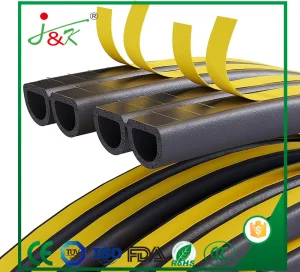
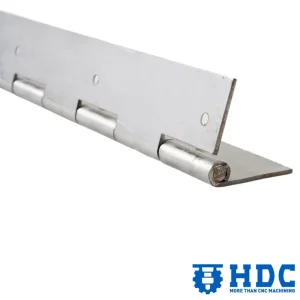
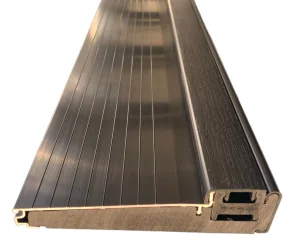
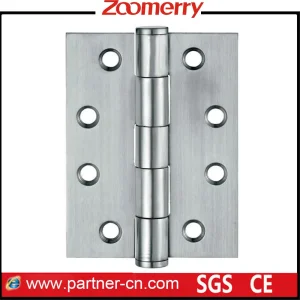
Jiangsu Globe Hardware Manufacturing Co., Ltd., established in 1993, is a manufacturer specializing in the production of UL-certified American standard fireproof Door hardware products for export. Our main products include Aluminum Continuous Geared Hinges, Push Bar & Pull Handle Sets, Weatherstrippings, Thresholds, Electrified Hardware and etc. After years of operation, our brand "Globe" has become the leading manufacturer of UL Certified door hardware products in China.
Our products are sold in over 30 regions or countries around the world and are widely used in various engineering projects, such as North America, Europe, Southeast Asia and the Middle East. Out of the pursuit of quality, over the years of our development, we have obtained many international certifications such as ISO9001, ANSI/BHMA A156.26 GRADE 1 and UL 10B/10C, etc.

We are a factory with 30 years (established 1993) experience of door hardware and door security products. Our online sales teams work closely with technical engineers, ensuring professional project delivery.

Enterprise which integrates professional design, development, and production. We provide OEM/ODM services from concept to finish, creating viable solutions for complex architectural needs.

Every worker in our factory knows that details decide quality. We pay meticulous attention to each step of production, ensuring compliance with UL 10B/10C and ANSI standards.
We have the experience, capability, and R&D resources to make any OEM/ODM integration a glowing success! Meihe (Globe) is an extremely versatile architectural hardware manufacturer with the ability to bring your concepts and ideas into viable solutions. We work with individuals and companies at all stages of design and manufacture, from concept to finish, in a highly focused effort to bring industry level products and services to you.
Once customer provides us with concept information and detailed specifications, we will notify them of the total cost for design, prototyping, and estimated cost per unit before the project begins. Meihe will work with customers until they are satisfied and all original design requirements are met, and the product performs exactly to customers' expectations. Meihe’s OEM/ODM services cover the full project life cycle.
Emphasis on high traffic durability and electrified access control. Systems must integrate with fire alarm panels for emergency fail-safe release.
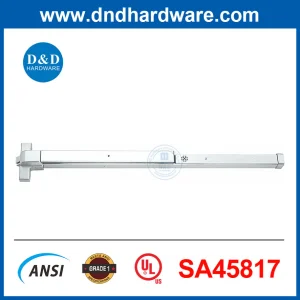
Focus on "Panic Hardware" multi-point systems (UL305) that allow effortless egress for large crowds while maintaining perimeter security.
Emphasis on aesthetics (concealed multi-points) and thermal sealing for passive house certification.
A1: A 3-point system typically locks at the top, bottom, and center. A 5-point system adds two additional locking points (often hooks or rollers) between the main three, providing even greater compression and security against prying attacks.
A2: Yes, modern electrified multi-point locks are designed to work with Z-Wave, Zigbee, or Bluetooth protocols, allowing for remote locking while the mechanical hooks provide the physical strength.
A3: UL (Underwriters Laboratories) certification ensures the hardware has been tested under extreme fire and stress conditions. For commercial buildings, using non-UL certified hardware can lead to insurance denials and safety code violations.
A4: While possible, it is challenging as it requires precise routing of the door edge. It is most efficient to specify multi-point systems during the initial door manufacturing process.
 Globe Hardware