Knowing how to maintain door hardware protects more than a door. It supports safety, privacy, accessibility, and the everyday comfort of a building. A loose lever, worn hinge, or stiff closer can signal a small problem before it becomes an expensive repair. How to maintain door hardware is not merely a cleaning question. It involves inspection, correct adjustment, suitable lubrication, and timely replacement.
Small details matter. Dust can collect around latch edges. Screws may loosen after months of vibration. A door closer that slams can damage the frame and create a safety risk. Regular checks help identify these changes early. Use manufacturer guidance whenever possible, because metals, finishes, and mechanisms require different care. A silicone-based product may suit one component, while another may need no lubricant at all.
Experience also teaches caution. I once treated a noisy hinge too quickly and overlooked a slightly misaligned door. The noise returned because the real issue was not lubrication. That mistake was useful, but avoidable. Maintenance should include observing how the door moves, not only wiping its surface. Open and close it several times. Check whether the latch engages fully. Look for corrosion, sharp edges, unusual resistance, or uneven gaps.
Good maintenance is practical and measured. It reduces interruptions, preserves appearance, and supports reliable operation. Still, not every repair should be improvised. Complex closers, fire-rated assemblies, and damaged frames may require a qualified professional. A careful routine, supported by documented inspections, gives property owners greater confidence and fewer surprises.
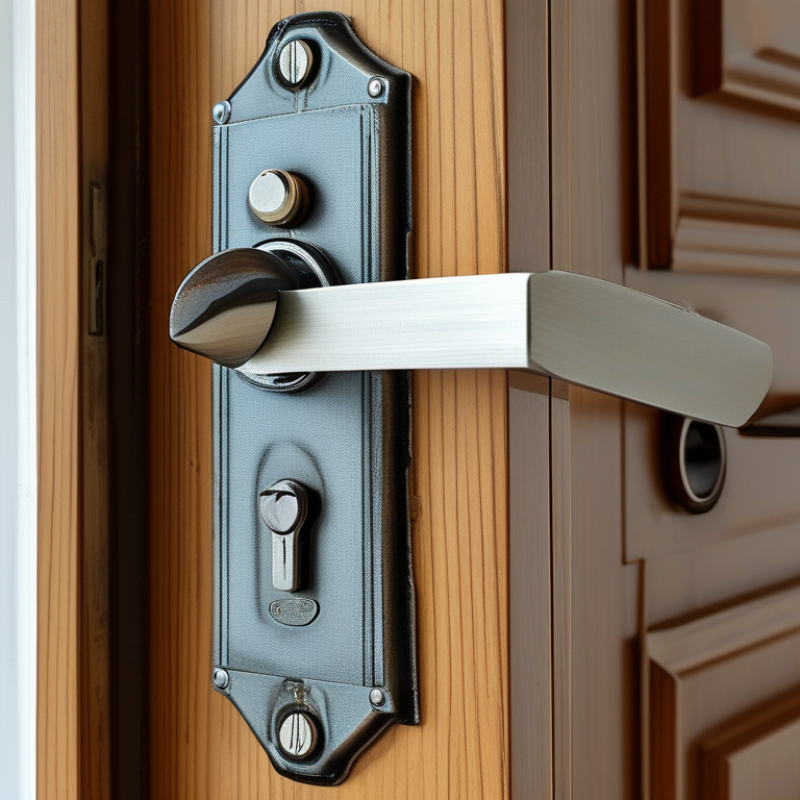
Door hardware is a safety system, not decoration. Hinges carry the door’s weight. Locks control access. Closers help doors resist smoke and fire spread. Panic hardware supports rapid exit without searching for keys. NFPA’s 2022 Fire Loss report recorded 1,504,500 fires, 3,790 civilian deaths, and 16,700 injuries in the United States. These figures make reliable exit hardware a practical safety concern.
A door can look secure while hiding serious faults. A loose hinge may cause scraping and delayed closing. A weak closer may leave a fire door partly open. An incorrectly adjusted latch can trap occupants or prevent proper locking. Access control systems also need careful design, especially during power loss or emergencies. OSHA requires exit routes to remain unobstructed and usable. That detail is easy to overlook.
Maintenance should match each hardware type and the building’s risk profile. Inspectors should test hinges, latches, closers, exit devices, seals, and electronic releases. They should check screws, alignment, closing speed, and unusual resistance. Record keeping supports reliable inspections and helps identify repeated failures. Yet perfect compliance on paper does not guarantee a usable door. That assumption deserves questioning. A closer may be technically functional but too strong for an older occupant. Hardware choices should consider children, disabled users, heavy traffic, and emergency conditions. Recheck after renovations, because a small floor change can affect the door’s movement.
| Door Hardware Type | Primary Role in Building Safety | Typical Applications | Key Maintenance Actions | Recommended Inspection Frequency | Common Warning Signs | Safety Priority |
|---|---|---|---|---|---|---|
| Door Hinges | Support the door leaf, maintain alignment, and allow controlled opening and closing. | Interior doors, entrance doors, fire-rated doors, and high-traffic corridors. | Check screws, tighten loose fixings, remove debris, and lubricate only where permitted by the hardware manufacturer. | Every 3–6 months; more often in high-traffic or corrosive environments. | Squeaking, sagging, uneven gaps, binding, loose screws, or visible corrosion. | High |
| Locks and Latches | Control access and keep the door securely closed when required. | Office doors, residential entrances, storage rooms, classrooms, and restricted areas. | Test the latch, inspect strike alignment, tighten hardware, clean keyways, and replace damaged components. | Monthly for critical access points; quarterly for standard interior doors. | Sticking keys, incomplete latching, forced operation, a loose lever, or a latch that does not fully engage. | High |
| Door Closers | Return doors to the closed position, helping maintain security, smoke control, and fire-compartmentation performance. | Fire doors, corridor doors, entrance doors, and doors subject to controlled closing. | Check mounting screws, closing speed, latching action, leaks, and arm condition; adjust only within approved limits. | Monthly in public or high-use buildings; at least quarterly elsewhere. | Door slams, fails to close, closes too slowly, leaks hydraulic fluid, or remains partly open. | Critical |
| Exit Devices and Panic Hardware | Provide rapid egress from occupied spaces without requiring a key or special knowledge. | Assembly areas, schools, healthcare facilities, workplaces, and emergency exits. | Operate the push bar, confirm free movement, inspect fasteners and dogging controls, and keep exit routes unobstructed. | Monthly and after any emergency, impact, or reported malfunction. | Stiff push bar, delayed release, incomplete retraction, rattling parts, or blocked exit operation. | Critical |
| Fire Door Hardware | Help fire doors close, latch, and maintain the intended barrier against fire and smoke. | Stairwells, fire compartments, corridors, plant rooms, and protected escape routes. | Inspect hinges, closers, latches, seals, vision panels, and gaps; never wedge or disable a fire door. | Monthly visual checks, with formal inspections based on local regulations and building policy. | Missing labels, damaged seals, excessive gaps, failed self-closing action, or unauthorized hold-open devices. | Critical |
| Door Stops and Hold-Open Devices | Limit door travel or hold doors open when permitted, reducing damage and improving circulation control. | Corridors, service areas, accessible routes, and doors exposed to strong air movement. | Check anchoring, alignment, release function, and wall condition; ensure approved hold-open systems release correctly. | Every 3–6 months and after impact or layout changes. | Loose mounting, damaged wall surface, failure to release, or a door being held open against fire-safety requirements. | Medium |
| Pull Handles and Door Levers | Provide a reliable point of manual operation and support safe, accessible use. | Public entrances, offices, accessible doors, retail areas, and internal circulation routes. | Tighten fixings, inspect for sharp edges, clean surfaces, and verify that levers return correctly. | Every 3 months in high-use areas; every 6 months in low-use areas. | Wobbling, cracked mounting points, sharp edges, difficult operation, or poor return movement. | Medium |
| Thresholds and Weather Seals | Reduce drafts, water intrusion, smoke leakage, noise transfer, and uneven floor transitions. | Exterior doors, energy-efficient buildings, acoustic rooms, and weather-exposed entrances. | Remove dirt, check compression and attachment, replace worn seals, and confirm that the threshold does not obstruct egress. | Every 6 months and after severe weather or renovation work. | Visible daylight, water marks, torn seals, tripping edges, drafts, or increased noise and energy loss. | Medium |
| Access Control Hardware | Manage authorized entry while supporting secure locking, auditability, and emergency release requirements. | Secure offices, laboratories, data rooms, residential buildings, and controlled entry points. | Test credentials, locking and unlocking, emergency release, power backup, cables, readers, and door alignment. | Monthly functional checks; more frequent testing for high-security or high-occupancy locations. | Intermittent access, delayed unlocking, unexplained lockouts, damaged wiring, or failure during power loss. | High |
| Automatic Door Operators | Enable hands-free or low-effort access while controlling opening, closing, and obstacle response. | Accessible entrances, healthcare facilities, public buildings, and high-traffic lobbies. | Test sensors, activation devices, opening and closing speed, safety detection, manual operation, and backup power. | Monthly; service immediately after abnormal movement or a safety-related incident. | Unexpected movement, failure to detect obstacles, repeated cycling, delayed response, or inability to open manually. | High |
: Listen for squeaks, grinding, or unusual resistance. A stiff lever, loose handle, or drifting door needs attention. Small signs matter.
Repeated opening creates friction in hinges, latches, closers, and exit devices. Busy doors may cycle hundreds of times daily. Fasteners loosen, and internal springs gradually wear.
Yes. A dropped door may scrape the strike plate instead of latching cleanly. People then pull, push, or slam harder. That extra force increases damage.
Keep screwdrivers, hex keys, a soft cloth, mild soap, and a flashlight nearby. A thin silicone-based lubricant may help moving joints. Check product instructions first.
Wipe dust from hinges and latch edges with a damp cloth. Dry every surface afterward. Avoid harsh cleaners, which may damage protective finishes.
Apply a small amount to moving joints. Wipe away excess residue. Do not spray every opening. Extra liquid can attract dust and affect internal parts.
Trapped water can corrode springs, screws, and concealed components. Damp corridors, bathrooms, and exterior openings need closer inspection. Salt air may speed corrosion.
Check screw tightness, alignment, closing speed, and unusual resistance. Test the door several times. It should close evenly, latch fully, and open without force.
Arrange inspection when hardware remains loose, cracked, or difficult to operate. Do not force it. A quick adjustment may hide an installation problem.
Record inspection dates and when problems appear. Patterns can reveal recurring alignment or installation issues. I once checked only the lock and missed a sagging hinge.
Understanding how to maintain door hardware is essential for preserving building safety, reliable access, and everyday convenience. Hinges, locks, handles, closers, exit devices, and other components each support the proper movement, closing, and securing of a door. Over time, dust, moisture, repeated use, loose fasteners, misalignment, and improper handling can cause wear or damage. Regular inspection helps identify warning signs such as squeaking, sticking, unusual movement, weak latching, or difficulty turning a lock.
Learning how to maintain door hardware involves using basic tools to tighten screws, clean surfaces, apply suitable lubricant where needed, check alignment, and test each component carefully. Proper maintenance improves security, smooth operation, and hardware longevity while reducing unexpected repair costs. Minor issues should be corrected promptly, but severely worn, damaged, or unreliable parts may need replacement. When a problem affects safe operation or requires specialized knowledge, seeking qualified professional assistance is the safest and most effective choice.

 Globe Hardware