What certifications door hardware needs depends on its function, location, and required level of protection. A classroom exit device, a fire-rated mortise lock, and an access-control reader do not follow the same approval path. This distinction matters because door hardware supports life safety, accessibility, security, and daily building operations. NFPA reported 1,504,500 fires in the United States during 2022, including thousands of civilian deaths and injuries. A door closer or latch may seem minor, yet poor performance can delay evacuation.
Professional evaluation usually begins with recognized standards and third-party listings. In North America, fire door assemblies commonly reference UL 10C, NFPA 80, and the International Building Code. Panic and fire exit hardware may involve UL 305 and ANSI/BHMA A156 standards. Accessibility requirements also relate to the ADA Standards for Accessible Design, including opening force and operable-hardware provisions. BHMA certification can support consistent product performance, while UL or another accredited laboratory may verify fire, panic, electrical, or security characteristics. Requirements vary by jurisdiction.
The practical question is not only whether a product carries a certification mark. Check the complete door assembly, installation instructions, label, and intended use. A certified lever may still fail when paired with the wrong strike, frame, or fire rating. That assumption is incomplete. On a real project, small details matter: a missing label, an oversized gap, or an incorrectly adjusted closer can undermine compliance. This guide examines the certifications, test standards, and documentation that specifiers, contractors, and facility managers should verify before selecting door hardware. Some requirements remain unclear without the local authority’s review.
Identify Hardware Categories Under ANSI/BHMA A156 Standards
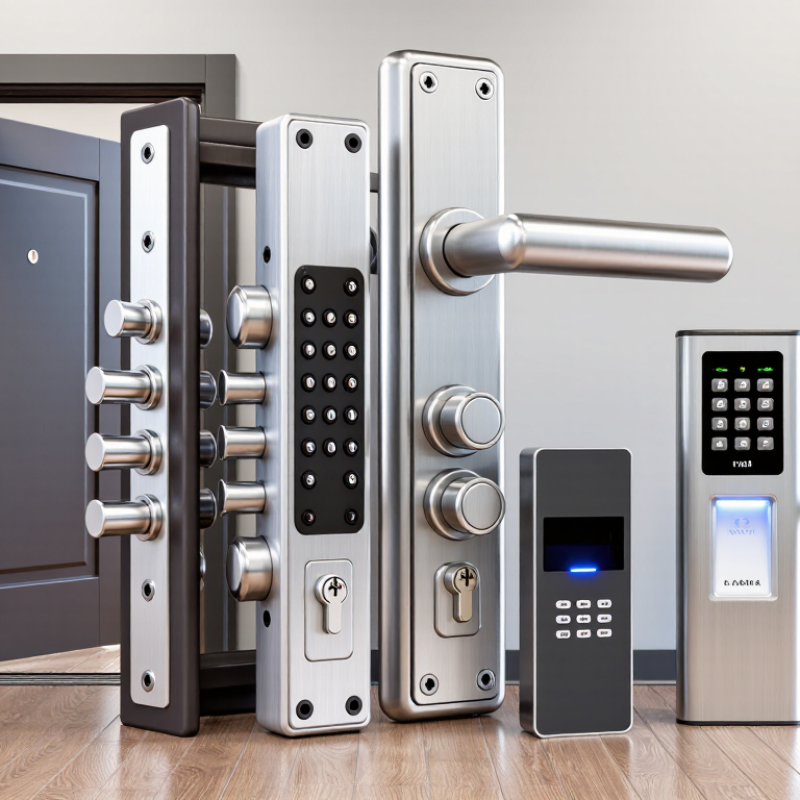
Door hardware does not have one universal certification. ANSI/BHMA A156 standards cover distinct product categories, so the relevant standard depends on what the hardware does. For example, A156.2 addresses bored locks, A156.3 covers exit devices, and A156.4 applies to door closers. Mortise locks, hinges, and low-energy power-operated doors have their own standards too.
A standard number helps identify what was tested, but it does not prove every similar-looking product is certified. Check the exact product model, applicable standard, performance grade, and current listing. Grades reflect different performance levels; the right choice depends on door use, traffic, and required durability. A busy school entrance and a quiet office door may need different hardware. Details can be easy to miss, and a standard reference alone may not settle the question.
Tips: Match each item to its category before comparing certifications. Check the manufacturer’s documentation or an independent certification directory for the exact model. If a listing is unclear, ask what test standard and grade it covers.
Confirm Panic and Exit Devices Under UL 305 and ANSI/BHMA A156.3
Door hardware is not certified by appearance alone. Panic and exit devices need documented evidence. UL 305 evaluates panic hardware for emergency egress applications. ANSI/BHMA A156.3 addresses exit devices, including operation, strength, durability, and construction. These standards answer different questions. Together, they help confirm whether a device suits a required exit location.
During a site review, I check the certification mark, model number, product listing, and installation instructions. The details should match the supplied hardware. A strong-looking push bar proves little. It may lack the correct evaluation. It may also be installed with an unapproved trim, fastener, or attachment. Small changes can affect performance. Clear records matter.
The door should release with one deliberate action and reasonable force. I inspect the latch, strike alignment, dogging method, and clearance around the bar. I also verify that the device fits the door, frame, and surrounding fire or egress conditions. UL 305 or ANSI/BHMA A156.3 compliance does not guarantee a poor installation will work safely. That is an uncomfortable point, but it deserves attention. Field conditions often expose gaps that paperwork misses. A certificate supports the decision; careful inspection confirms the result.
Apply NFPA 80’s Annual Inspection Requirement to Fire-Door Hardware
What Certifications Does Door Hardware Need?
NFPA 80’s annual inspection requirement applies to fire-door assemblies, including their operating hardware. The hardware does not usually need one universal “annual certification.” Instead, each component should be listed, labeled, or approved for its intended fire-door application. Local requirements may vary. The authority having jurisdiction should confirm acceptable documentation.
A qualified inspector should examine hinges, pivots, locks, latches, closers, coordinators, exit devices, and gasketing. The door should close fully without assistance. The latch should engage securely. Hardware must not be loose, damaged, painted over, or blocked by wedges. Check the frame, labels, clearances, and visible fasteners too. Small defects matter.
Inspection records should identify the opening, date, inspector, deficiencies, and corrective action. Keep supporting documents for replacement hardware, especially listing information and installation instructions. Mixing incompatible parts can affect the assembly’s tested performance. Field drilling or unauthorized alterations may create another problem.
A checklist helps, but it can miss practical details. A closer may pass once and fail under repeated use. A latch may look intact while barely engaging. That is why functional testing matters. Fire-door hardware needs evidence, not assumptions. And honestly, inspection notes are sometimes too vague to support reliable follow-up. Clear photographs and specific descriptions make the next review more useful.
Fire-Door Hardware: NFPA 80 Annual Inspection Interval
NFPA 80 requires fire-door assemblies to be inspected and tested at least once a year.
The 12-month interval represents the minimum inspection frequency—not a hardware certification. Inspection and testing cover the fire-door assembly, including its operating components. Confirm applicable requirements with the locally adopted NFPA 80 edition and the authority having jurisdiction.
Meet ADA 404.2.9’s 5 lbf Maximum Opening-Force Requirement
ADA 404.2.9 sets a maximum opening force of 5 lbf for interior hinged doors and sliding or folding doors. The U.S. Access Board’s 2010 ADA Standards provide this measurable threshold. It is not a general certification for every door or hardware component. Fire doors follow the minimum force allowed by the relevant administrative authority, while exterior doors are not assigned the same 5 lbf limit. Details matter. The standard also excludes the force needed to retract a latch or release another device holding the door closed.
For a practical check, measure force at the door’s leading edge with a suitable force gauge, following the Access Board’s guidance. Record the reading, door position, and test conditions; a closer can behave differently when seals drag or hinges are misaligned. If force exceeds the limit, inspect the closer setting, hinges, latching hardware, and weather seals before replacing components. A single passing measurement may not tell the whole story. Repeat checks after adjustments, and verify that the door still closes and latches reliably. The 5 lbf figure is useful, but it can be easy to focus on the number and miss how the door works in everyday use.
What Certifications Does Door Hardware Need? - Meet ADA 404.2.9’s 5 lbf Maximum Opening-Force Requirement
| Topic |
Requirement or scope |
How to verify |
Important note |
| Interior hinged doors and gates |
ADA 404.2.9 limits the force to open an interior hinged door or gate to 5 lbf (22.2 N) maximum. |
Measure the force needed to open the installed door using a suitable force-measuring instrument, and compare it with the applicable limit. |
This is an opening-force requirement for the door assembly, not a product certification label. |
| Sliding and folding doors |
ADA 404.2.9 also sets a 5 lbf (22.2 N) maximum opening force for sliding and folding doors. |
Check the force required to start and continue opening the installed door, taking account of its track, guides, and hardware. |
The requirement applies to the door’s operation, not just the force needed to move a detached hardware component. |
| Exterior hinged doors |
ADA 404.2.9 does not specify a maximum opening force for exterior hinged doors. |
Review applicable state and local building codes and project requirements. |
Do not apply the 5 lbf limit to exterior hinged doors as though it were stated in ADA 404.2.9. |
| Fire doors |
ADA 404.2.9 provides an exception: opening force for fire doors is as specified by the appropriate administrative authority. |
Confirm the applicable fire-code requirements and authority having jurisdiction for the project. |
Fire-door requirements may affect permissible closer settings and must be coordinated with life-safety requirements. |
| Door hardware operable parts |
Under ADA 404.2.7 and 309.4, operable parts must be usable with one hand, without tight grasping, pinching, or twisting of the wrist, and with no more than 5 lbf (22.2 N) of force. |
Check the installed handles, latches, locks, and other operable parts for accessible operation and operating force. |
This 5 lbf limit for operating parts is distinct from the door opening-force provisions in 404.2.9. |
| Hardware mounting height |
ADA 404.2.7 generally requires door and gate hardware operable parts to be mounted 34–48 inches (865–1,220 mm) above the finished floor or ground. |
Measure the height of the operable part after installation. |
Check the applicable standard and any exceptions for the specific door type and project. |
| Door closer timing |
For doors with closers, ADA 404.2.8.2 requires the door to take at least 5 seconds to move from 90 degrees open to 12 degrees from the latch. |
Time the closing sweep after installation and adjustment. |
Closing speed and opening force are separate checks; adjust the closer without compromising applicable fire-door requirements. |
| Certification and compliance evidence |
The ADA Standards specify accessibility requirements; they do not establish a general ADA certification for door hardware. |
Keep project specifications, product documentation, installation records, and results of on-site measurements or inspections. |
A product test report or industry-standard listing may support evaluation, but does not by itself prove that the installed door complies with ADA requirements. |
Conclusion
What certifications door hardware needs depends on its function and the door where it is installed. ANSI/BHMA A156 standards cover different hardware categories and provide performance criteria for products such as locks, hinges, and exit devices. Hardware used on fire doors should be tested for fire performance under standards such as UL 10C and NFPA 252. Panic and exit devices should also meet the applicable requirements of UL 305 and ANSI/BHMA A156.3.
Certification and testing are only part of compliance. NFPA 80 calls for annual inspections of fire-door assemblies and their hardware to confirm that they remain in working condition. Accessibility is another consideration: under ADA 404.2.9, the opening force for applicable doors must not exceed 5 lbf, subject to relevant exceptions. Selecting hardware means matching its documented test results and performance ratings to the door’s purpose, while maintaining and inspecting the complete assembly as required.

 Globe Hardware