How to Choose Pull Handles for Business Use in 2026?

Time:2026-09-25 Author:Sophia
0%

How to select pull handles for business use is becoming a practical design and procurement question for 2026. Commercial buyers must balance grip comfort, durability, hygiene, security, and visual consistency. A handle may look impressive in a showroom, yet feel cold, sharp, or unstable after months of daily use. That detail matters.

Industry reports support this more careful approach. Grand View Research’s door handles market analysis identifies commercial construction, renovation, and replacement demand as important growth drivers. Fortune Business Insights also links architectural hardware demand with urban development, hospitality projects, healthcare facilities, and improved building functionality. These reports do not choose a handle for you. They show why business specifications require more than attractive finishes.

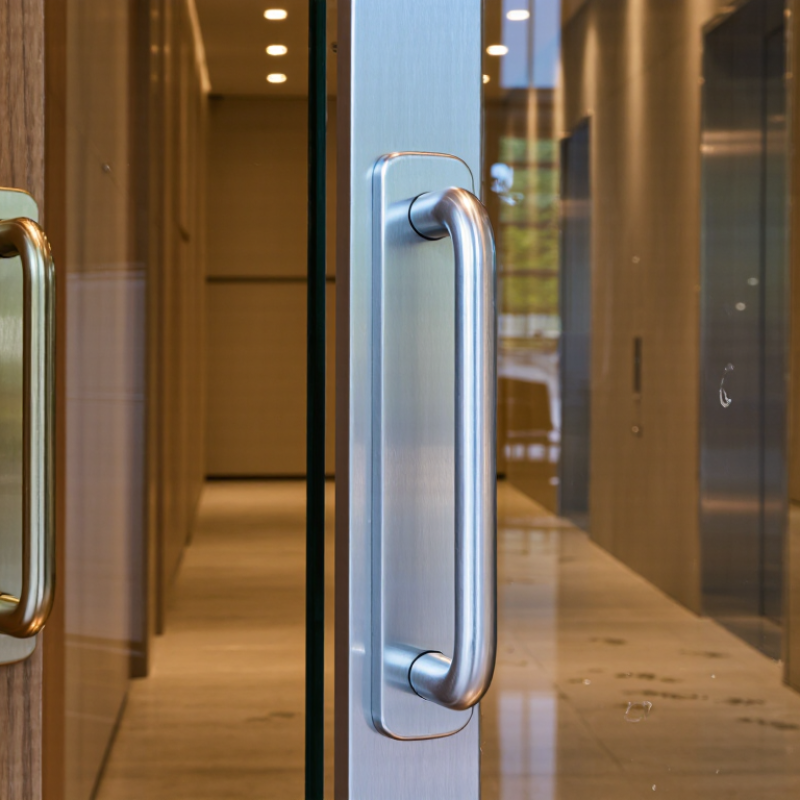
Don Norman, a leading design researcher, wrote, “Design is really an act of communication.” His principle applies directly to commercial pull handles. A long stainless-steel handle can communicate durability at a hotel entrance. A warm brass finish may support a boutique retail identity. However, appearance alone is not enough. The 2026 decision should examine hand clearance, mounting strength, material grade, cleaning routines, door weight, and expected traffic. ISO 21542 and accessibility guidance can also help teams review reachability and usability, although local project requirements still need checking.

This guide offers a realistic framework for comparing sizes, shapes, finishes, fixing systems, and lifecycle costs. Some choices remain subjective. That is uncomfortable, but useful. The cheapest handle may become the most expensive after repeated repairs, loose fixings, or early replacement. Good selection is not perfection. It is informed restraint.
How to Choose Pull Handles for Business Use in 2026?

Define Business Requirements for Pull Handles in 2026

Before comparing pull handles, define what each door must withstand in daily business use. A hotel laundry door may face wet hands and carts, while a clinic cabinet needs frequent, easy access. Record expected opening cycles, cleaning products, moisture, and the force users can comfortably apply. Small details matter. Measure door thickness and available clearance, then check whether gloves or limited grip affect handling. Do not assume one handle suits every area. Ask maintenance staff what loosens, stains, or catches sleeves.

These observations help set practical requirements for material, finish, fixing method, size, and projection. Choose a finish that tolerates the actual cleaning routine, not just a showroom wipe. On a busy stockroom door, through-fixing may be more reliable than a quick surface screw. Check edge distances and substrate strength before specifying it. Plan for replacement. Keep dimensions consistent where possible, but allow exceptions for wet rooms or accessible workstations. Ask suppliers for installation guidance and care instructions, and verify claims against available test data. A requirement may still be wrong; review a sample on the door before ordering in volume.

Compare Pull Handle Materials, Finishes, and Construction Quality

How to Choose Pull Handles for Business Use in 2026?

Material Selection

Material choice should follow traffic, cleaning routines, and door weight. Stainless steel remains a dependable option for busy offices, hospitals, and retail entrances. The World Stainless Association recorded 58.4 million tonnes of stainless steel production in 2023. That scale supports long-term material availability and easier replacement planning. Grade 304 suits many indoor environments, while grade 316 offers stronger resistance near salt, moisture, and harsh cleaning chemicals.

Construction & Durability

Aluminium is lighter and easier to handle during installation. The International Aluminium Institute reports that recycled aluminium requires about 5% of the energy used for primary aluminium production. Still, thin aluminium handles can feel hollow and may deform under repeated impact. Solid sections matter. So do concealed through-bolts, reinforced backplates, and clean welds. I once chose a beautiful tubular handle with weak fixing points. It loosened within months. Appearance was not the problem; construction was.

Finish & Maintenance

Finish affects hygiene, wear, and maintenance. Brushed finishes hide fingerprints better than polished surfaces. PVD coatings can improve abrasion resistance, but performance depends on preparation and coating thickness. Powder coating offers broad color choices, yet damaged edges may expose the base metal. Ask for documented salt-spray, cycle, and coating tests. ANSI/BHMA architectural hardware standards can help structure that review. Be cautious with vague phrases like “commercial grade.” They sound useful, but they prove very little.

Match Handle Design with Door Type, Traffic, and User Needs

How to Choose Pull Handles for Business Use in 2026?

Choose the handle after studying the door, not before. Glass doors need slim, visible pulls with soft edges. Heavy timber doors need stronger fixing points and a larger grip. For fire-rated doors, confirm compatibility with the door assembly and local specifications. The U.S. Access Board’s ADA Standards limit interior door opening force to 5 pounds. A handle that looks elegant but requires a hard pull can fail daily users.

Traffic changes the specification. A hotel entrance may face thousands of touches weekly, while a private office needs less aggressive hardware. In busy corridors, use a diameter that supports wet, gloved, or weaker hands. The National Safety Council’s Injury Facts 2024 continues to identify falls as a major workplace injury concern. Smooth operation and clear access can reduce awkward movements near thresholds. Still, traffic estimates are often imperfect. Measure actual use for several days before ordering.

Tips: Create a short mock-up at real height. Test it with one hand, a bag, and winter gloves. Check screw access, cleaning routines, and nearby signage. Pull handles should guide movement without becoming obstacles. I would also test noise. A strong handle that slams against glass is not a successful choice. Reconsider the design if maintenance staff dislike it.

Evaluate Ergonomics, Accessibility, Security, and Maintenance

How to Choose Pull Handles for Business Use in 2026?

A commercial pull handle should feel natural before it looks impressive. Check its diameter, grip texture, projection, and clearance with gloved or wet hands. A handle that suits a showroom may frustrate warehouse staff after eight hours. Test it with different users, including people with limited strength or reach. Avoid sharp edges and excessive resistance. Accessibility requirements vary by location, so confirm current local guidance with a qualified professional.

Security depends on the door, fixing method, and surrounding hardware. Use concealed or tamper-resistant fasteners where appropriate. Pull handles should not create convenient snag points near crowded entrances. Measure the door weight and traffic frequency before selecting materials. An oversized handle can encourage rough use. A weak fixing can loosen quickly. These details are easy to miss.

Maintenance should be planned, not guessed. Stainless steel, coated metals, and antimicrobial finishes may perform differently in humid corridors or busy kitchens. Ask how often the surface needs cleaning and whether common cleaners can damage it. Inspect screws, joints, and mounting plates during routine facility checks. Real testing is humbling. A sample handle may feel excellent for five minutes, then become tiring during repeated use. Leave room for that possibility, and record feedback from cleaners, security staff, and daily users before approving the final specification.

Check Installation Standards, Supplier Reliability, and Total Cost

How to Choose Pull Handles for Business Use in 2026?

Check Installation Standards, Supplier Reliability, and Total Cost

For busy offices, clinics, and retail sites, a handle must suit the door, users, and cleaning routine. Check fixing centres, door thickness, material, and required clearance before ordering. The U.S. Access Board’s 2010 ADA Standards place operable parts 34 to 48 inches above the floor. Confirm the complete door setup meets applicable accessibility requirements; a handle alone does not ensure compliance.

Supplier reliability matters after installation, too. Ask for material specifications, load or cycle-test evidence, finish-care instructions, and a clear replacement-parts policy. Request samples when finish consistency matters across several doors. Check stated lead times and warranty exclusions in writing. Small details count. A delayed replacement can leave a high-traffic door awkward to use.

Tips: Compare total cost, not just unit price. Include installation labour, fasteners, cleaning, expected replacement, and delivery in your estimate. The U.S. Department of Energy’s Federal Energy Management Program uses life-cycle costing guidance in NIST Handbook 135 to assess costs across an asset’s service life. Apply that thinking to handles: a cheaper finish may need more frequent replacement. Still, service-life estimates are assumptions; test samples in the actual environment before specifying hundreds of units.

FAQS

How should I choose a pull handle for a glass door?

Choose a slim, visible handle with softly finished edges. Check that it does not strike the glass when the door opens.

What changes when fitting a handle to a heavy timber door?

Use strong fixing points and a grip large enough for comfortable pulling. Check the door’s weight before choosing the mounting hardware.

How can I tell whether a handle suits a busy entrance?

Estimate daily use, then observe the entrance for several days. A hotel lobby may need a more durable grip than a quiet office. Estimates can be wrong.

What should I test for comfortable handling?

Try the handle with one hand, a bag, and winter gloves. Check its diameter, projection, texture, and clearance. Test it first.

How can a pull handle support accessible use?

Choose a handle that needs little effort and works for people with different reach or grip strength. Check current local accessibility guidance before ordering.

What fixing details should I check for security and durability?

Confirm that the fixings suit the door and its expected use. Concealed or tamper-resistant fasteners may help where appropriate. Inspect screws and joints regularly.

Which handle materials and finishes are suitable for busy spaces?

Compare stainless steel and coated finishes for the room’s humidity and cleaning routine. Ask whether common cleaners could damage the surface. Small details matter.

How can I tell if a handle will stay comfortable over time?

Let several daily users test a sample repeatedly, not just once. Ask cleaners and facility staff for feedback. Five minutes may not reveal fatigue.

Conclusion

Choosing commercial pull handles in 2026 starts with understanding the demands of the building, including expected traffic, door type, operating conditions, and user needs. Compare materials, finishes, and construction quality for durability and ease of care, then select a design suited to the door’s size and frequency of use. How to select pull handles for business use also involves considering comfortable grip, accessibility, security requirements, and how easily the handles can be cleaned and maintained.

Before purchasing, confirm that the handles are compatible with the door and can be installed using suitable methods and hardware. Assess supplier reliability, product consistency, availability of installation information, and after-sales support. Finally, compare the total cost over the expected service life rather than focusing only on the initial price. A well-chosen handle can support reliable daily operation while providing a practical, comfortable, and cohesive solution for a business environment.

Sophia

Sophia

Sophia is a dedicated marketing professional with an exceptional depth of knowledge about her company's products and services. With a keen understanding of market trends and customer needs, she crafts insightful blog posts that not only inform but also engage readers, enriching the company’s online......