How to Choose Between Interior and Exterior Hardware in 2026

Time:2026-10-30 Author:Aria
0%

Choosing hardware in 2026 means looking beyond matching finishes. A lever that feels solid in a quiet hallway may loosen quickly on a frequently used exterior gate. Sun, rain, temperature changes, and cleaning products can all affect how hardware performs. Small details matter.

How to choose between interior and exterior hardware starts with the conditions each piece must handle. Indoors, prioritize comfortable operation, suitable privacy or passage functions, and finishes that complement nearby fixtures. Outdoors, check the manufacturer’s guidance for weather exposure, corrosion resistance, and maintenance. A label alone is not enough; compare the stated material, coating, installation requirements, and warranty.

Think about the door itself, too. Its thickness, handing, existing bore holes, and frame condition can determine which products fit. For an exterior entry, evaluate the complete lockset and strike installation rather than judging security by appearance. Follow product instructions, and check applicable local requirements when fire-rated openings or accessibility are involved.

There is no universal best finish. A dark coating may look excellent beneath a porch roof, yet show wear on a gate exposed to salt spray. That sounds simple. It isn’t always. Before buying, measure the door, note its exposure, and consider who will use it every day. This guide compares interior and exterior hardware by purpose, materials, durability, installation, and upkeep, so you can make a practical choice—and recognize when the details deserve another look.
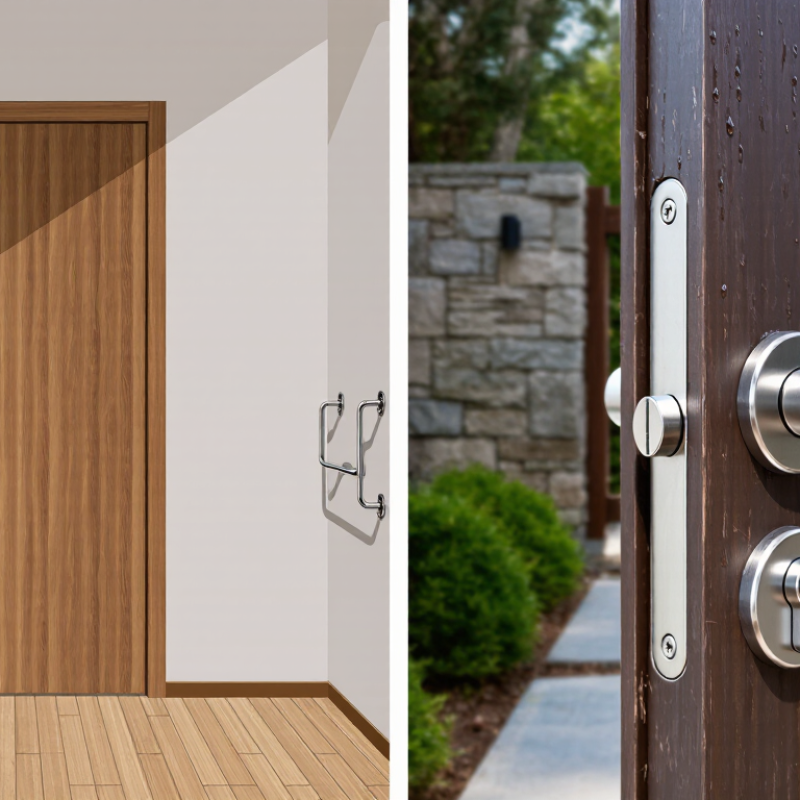
How to Choose Between Interior and Exterior Hardware in 2026

Understanding Interior and Exterior Hardware Categories in 2026

In 2026, interior hardware covers the parts used inside a building: passage levers, privacy locks, cabinet pulls, and hinges. Their main demands are comfortable operation, suitable privacy, and a finish that fits the room. A bedroom privacy lock, for example, serves a different purpose from a hallway latch. That distinction matters.

Exterior hardware faces rain, sunlight, temperature swings, and frequent handling. Entry handles, deadbolts, exterior hinges, and gate latches should be selected for their exposure and intended use. Look for clear product specifications on corrosion resistance, compatible door thickness, and lock function. A polished finish alone does not prove that a fitting will withstand outdoor conditions.

Some categories overlap. A door between a garage and a living space may need hardware chosen for both daily convenience and the door’s specific requirements. Smart locks add another category of features, such as keypad or app access, but connectivity does not replace checking mechanical fit and backup entry options. Small details count. Measure the door, note whether it swings inward or outward, and check the existing hole spacing before ordering. I have seen attractive hardware become frustrating because one measurement was skipped. It happens. Compare the product’s stated use with the actual location, especially where damp air, salt, or heavy traffic can shorten a finish’s life.

Comparing Materials, Durability, Security, and Maintenance

Exterior hardware faces rain, sunlight, temperature swings, and frequent handling. For exposed doors, choose corrosion-resistant materials such as stainless steel, and check that the finish suits your local conditions. Salt air can pit some metals surprisingly fast. Brass offers a warm look, but its surface may darken and need occasional polishing. Interior hardware usually has an easier life, so comfort, appearance, and feel can weigh more heavily. Small details matter.

Durability depends on more than material. A solid latch should move smoothly without sticking, and screws should stay secure after repeated use. Exterior locks and handles also need to resist tampering while remaining easy for household members to operate. Maintenance is practical, not glamorous: wipe away grit, dry wet surfaces, and inspect loose fittings. I have seen attractive finishes age poorly when damp grime sits in seams. That is easy to overlook.

Tips: Match the hardware to the door’s exposure, not just its color. Check hinges and latches during seasonal cleaning. If a handle feels rough, clean it before applying lubricant; the wrong product can attract dust. Read the care instructions, then follow them consistently.

How to Choose Between Interior and Exterior Hardware in 2026: Comparing Materials, Durability, Security, and Maintenance

Comparison Factor Interior Hardware Exterior Hardware Practical Selection Guidance
Typical applications Bedroom and bathroom handles, passage knobs, cabinet pulls, and hinges in conditioned indoor spaces. Entry handlesets, deadbolts, exterior hinges, gates, and other hardware exposed to outdoor conditions. Match the hardware to its location and function. A sheltered porch and an exposed coastal entry do not face the same conditions.
Common materials Zinc alloy, steel, brass, and stainless steel are common, with material choice often guided by appearance, feel, and price. Stainless steel, brass, bronze, and coated steel are used; suitability depends on the material grade, construction, and finish. For damp or salt-laden environments, prioritize corrosion-resistant materials and finishes specified for that exposure. The material name alone does not guarantee performance.
Finish and weather exposure Indoor finishes generally face less rain and ultraviolet exposure, though bathrooms and laundry rooms can be humid. Rain, sunlight, temperature changes, pollution, and airborne salt can wear finishes and contribute to corrosion. Check the manufacturer’s exposure and care guidance. Use hardware rated for the installation environment, especially near the coast or around pools.
Durability considerations Wear is commonly driven by repeated operation, impact, loose fasteners, and moisture in high-humidity rooms. Outdoor exposure adds weathering and corrosion risks to normal mechanical wear. Look for sound construction, suitable components, and an appropriate performance rating where available. Installation quality and door alignment also affect service life.
Security needs Passage hardware suits rooms that do not need to lock; privacy hardware is commonly used for bathrooms and bedrooms. Entry doors typically need a suitable keyed lock or deadbolt, plus a properly secured door, frame, and strike area. Choose locks for the door’s security role. A strong lock cannot compensate for a weak frame, poor installation, or an unsuitable door; follow applicable building and egress requirements.
Maintenance Clean with a soft cloth and a mild cleaner compatible with the finish. Periodically tighten loose screws and check moving parts. Remove dirt and salt deposits regularly, inspect the finish and fasteners, and lubricate moving components as directed. Avoid abrasive pads and harsh chemicals unless the care instructions explicitly allow them. More frequent inspection is prudent in severe weather or coastal locations.
Best fit Prioritize comfortable operation, privacy or passage function, finish coordination, and resistance to indoor wear. Prioritize exposure suitability, reliable locking function, corrosion resistance, and compatibility with the door and frame. Compare the product’s documented specifications and care instructions with the actual site conditions rather than choosing by appearance alone.

Note: Actual performance varies by product design, material grade, finish, installation, frequency of use, and local environment. Verify current product specifications and applicable building requirements before purchase.

Assessing Location, Climate, Usage, and Building Requirements

Choosing hardware begins with where the door sits. Interior handles usually face stable conditions, though bathrooms and laundry rooms bring moisture. Exterior hardware must withstand rain, sunlight, temperature swings, and, near coasts, salty air. Check the product’s stated corrosion resistance and the door’s material before choosing a finish. A finish that looks right indoors may wear quickly on a wet, south-facing entrance. Building requirements matter, too: confirm that the hardware suits the door assembly and any applicable accessibility, fire-safety, or emergency-exit requirements. When in doubt, check the project documents or ask a qualified installer.

Tips: Check the door schedule. Note exposure, traffic, and cleaning routines. Verify fit and required functions before ordering; replacing mismatched hardware can mean extra drilling and repair.

Usage changes the decision. A quiet bedroom door has different demands from a busy entrance used by children, delivery workers, or people carrying bags. Consider grip comfort, locking needs, and how often the surface will be cleaned. Heavy use may call for more durable components, but “heavier” is not automatically better. Recheck the choice against the actual door and its daily use. A small detail, like a handle that feels slippery with wet hands, is easy to overlook.

How to Choose Between Interior and Exterior Hardware in 2026

Compare typical planning priorities by installation location. Rate each factor from 1 (lower priority) to 5 (higher priority).

How to use this chart: Exterior hardware generally needs greater attention to weather exposure and corrosion resistance. Actual requirements depend on the site, expected traffic, door function, and applicable building and fire codes. Ratings are qualitative planning guidance, not product test results.

Matching Hardware Features to Your Budget and Design Needs

How to Choose Between Interior and Exterior Hardware in 2026

Choose hardware by the work each door needs to do, then set a realistic budget. An exterior entry handle faces rain, sun, and frequent use. Look for a weather-resistant finish, a sturdy latch, and a lock that fits your door’s thickness. In coastal or damp areas, corrosion resistance matters more than a trendy finish. Check the measurements before buying. Small detail. Big difference.

Interior hardware has different priorities. A bedroom or bathroom may need a privacy lock, while a hallway closet usually needs only a simple passage handle. For a busy household, smooth operation and comfortable grip can be worth paying extra for. Decorative knobs may look polished, but they can be awkward for small hands or anyone carrying laundry. Try the shape in person if possible.

When funds are limited, prioritize reliable exterior security and spend less on low-use interior doors. You can still create a coordinated look by repeating finishes, such as warm brass or matte black, without buying identical sets everywhere. Keep in mind that finishes can look different under warm bulbs than in daylight. There is no perfect match for every room; a small contrast may feel more natural than forcing uniformity. Before installation, confirm the backset and latch dimensions to avoid an expensive second trip.

Choosing and Verifying the Right Hardware for Each Application

Interior and exterior hardware face different stresses, so selection should begin with the actual exposure. A bedroom lever may see frequent handling, but an exterior latch also faces rain, temperature swings, and airborne salts. Match the substrate and finish to those conditions, then check the manufacturer’s stated test methods and limits. Appearance alone is not enough.

The 2016 NACE IMPACT study estimated global corrosion costs at US$2.5 trillion annually, or about 3.4% of global GDP. That figure covers many industries, not door hardware alone, but it shows why corrosion resistance deserves attention. For coastal or frequently washed areas, verify that finish testing reflects relevant exposure. ASTM B117 salt-spray results can help compare samples, but they do not directly predict service life. I would not treat a shiny finish as proof; that is an easy mistake.

For each opening, record the door material, location, expected traffic, and locking needs. Check that hinges, fasteners, and latch components suit the same environment; one weak component can undermine the set. Confirm dimensions and handing on site before ordering. Where applicable, compare performance claims with recognized BHMA A156 test standards, and request the specific grade or test documentation. Tests are useful, but real buildings are messier. A sheltered entrance may still collect condensation, so inspect installed hardware after the first season and revise the specification if wear appears early.

FAQS

What material works well for an exterior door?

Corrosion-resistant materials, such as stainless steel, suit exposed doors. Salt air can still damage some finishes over time.

Does brass need special care?

Brass has a warm appearance, but its surface may darken. Occasional polishing may help. Not everyone wants that upkeep.

How can I keep a latch working smoothly?

Wipe away grit and check for loose screws. If the handle feels rough, clean it before applying lubricant.

What hardware does a bathroom door need?

A bathroom often needs a privacy lock. A hallway closet may only need a simple passage handle.

How should I choose hardware on a limited budget?

Prioritize a reliable exterior lock and latch. Spend less on interior doors that see little use.

What should I measure before ordering?

Check the door thickness, backset, latch dimensions, and handing on site. A quick measurement can prevent another trip.

Can one finish suit every room?

Repeating finishes can create a coordinated look, but exact matches are not essential. Warm bulbs may change how a finish appears.

How can I tell whether a finish will last outdoors?

Review its stated test methods and limits, then inspect installed hardware after the first season. Test results help, but they cannot predict every building’s conditions.

Conclusion

How to choose between interior and exterior hardware in 2026 begins with understanding where each type will be used and what it needs to do. Interior hardware is selected primarily for everyday function, appearance, and comfort, while exterior hardware must also withstand weather and support appropriate security. Comparing materials, durability, maintenance needs, and security features helps clarify which options are suitable for each application.

Consider the location’s climate, expected frequency of use, and any building requirements before making a decision. Then balance practical features with your budget and design preferences, keeping long-term upkeep in mind alongside the initial cost. Before purchasing or installing hardware, verify that its specifications match the intended setting and use. A careful comparison can help create a consistent look while ensuring each fixture is durable, functional, and appropriate for its location.

Aria

Aria

Aria is a dedicated marketing professional with a deep passion for innovative strategies and a keen understanding of our company's product offerings. With a wealth of experience in the industry, Aria excels at crafting engaging content that highlights the unique features and benefits of our......